QUALITY & TRACEABILITY

Evidence should stay
connected to the
requirement.

Quality begins with a clear understanding of what the component is required to meet. For each supply requirement, the agreed drawing, specification, material requirement and other applicable technical requirements provide the basis for what needs to be checked and what supporting evidence is required. The level of verification may vary by component and buyer requirement, but the principle remains consistent: what is required, what is checked, and what evidence supports the supply should remain clearly connected.

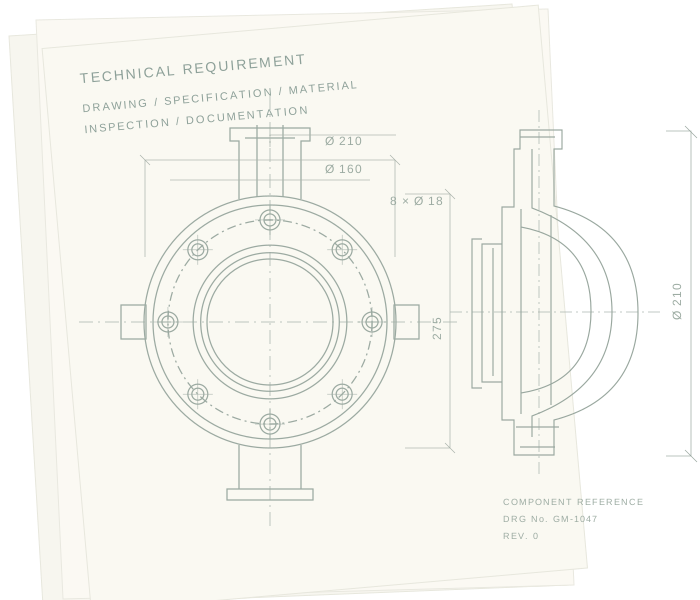
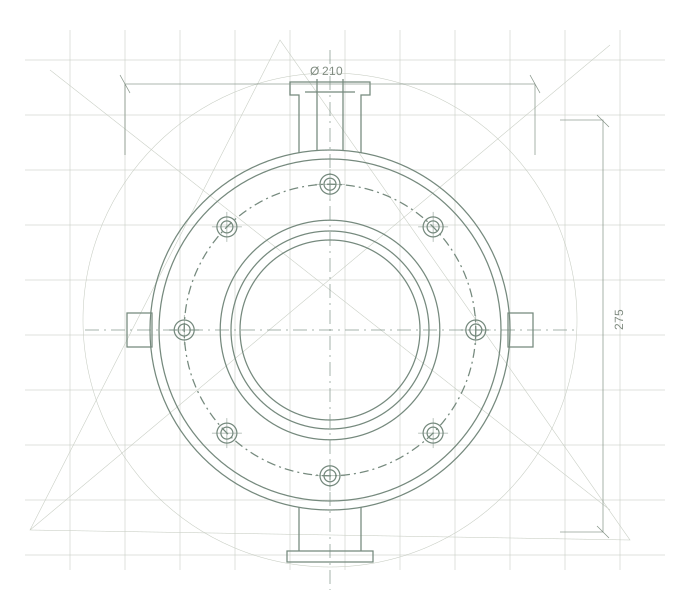
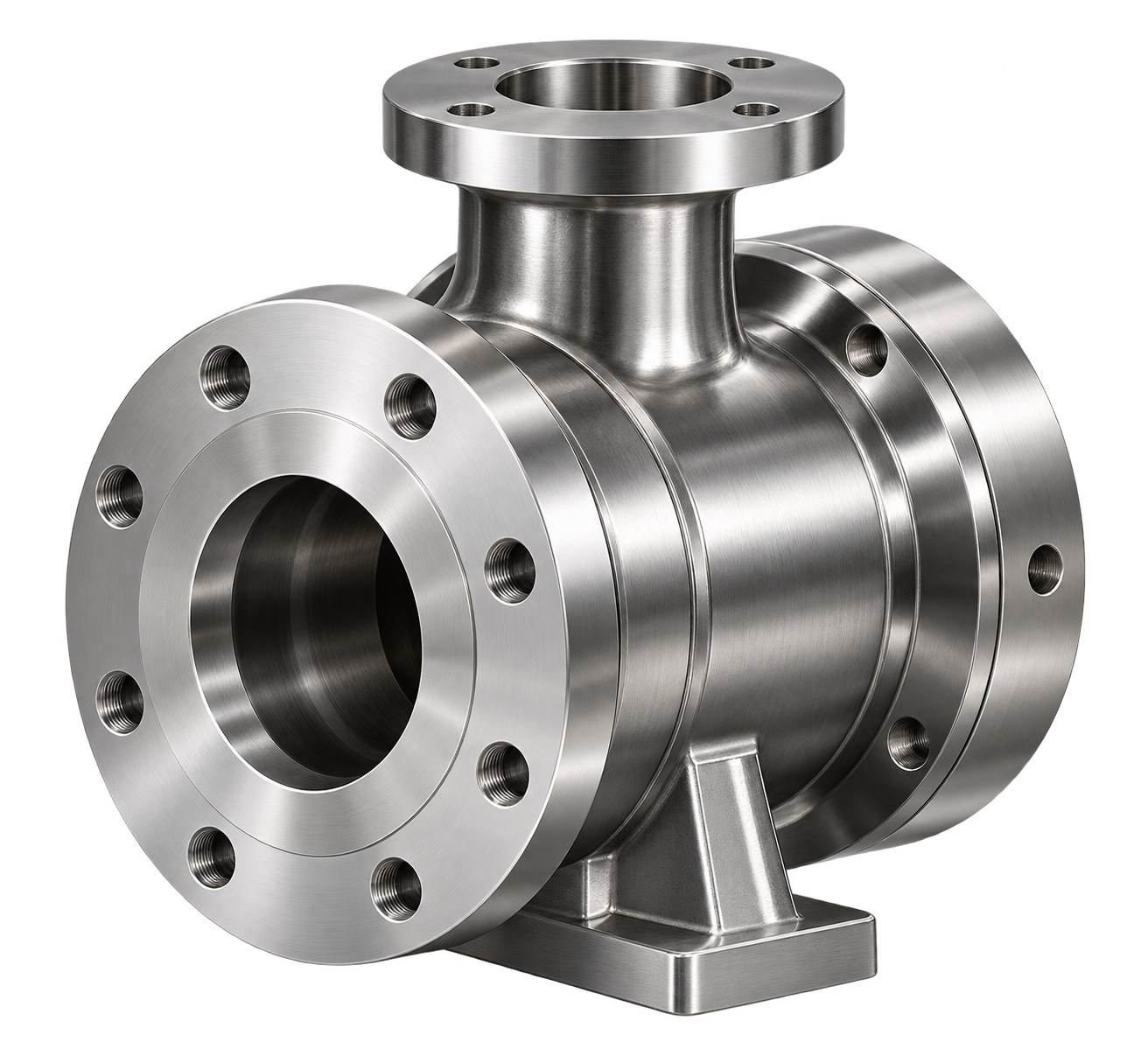
Illustrative front and side engineering views of a flanged component with dimensions and requirement references

FROM
REQUIREMENT
TO SUPPLY

1 — QUALITY BASIS

Quality starts with the agreed
requirement.

The technical requirements agreed for the order define what needs to be controlled. Depending on the component, this may include:

DIMENSIONS & TOLERANCES

Important dimensions, fits, clearances and tolerances.

MATERIAL

The specified or applicable material requirement.

SURFACE & OTHER REQUIREMENTS

Surface finish, hardness, treatment or other specified characteristics where applicable.

DOCUMENTATION

Any material, inspection, traceability or supporting records required with the order.

Not every component requires the same level of control. The quality requirements should match the actual technical requirement of the order.

Front view of a flanged component with bolt holes, concentric dimensions and construction lines

SPECIFICATION
MATERIAL
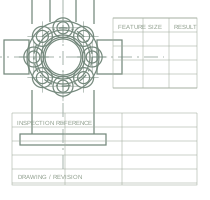
INSPECTION
DOCUMENTATION

2 — VERIFICATION & EVIDENCE

Check what matters and support
it with the right evidence.

The applicable checks are based on the agreed technical requirement.
Depending on the order, verification may include:

  • dimensional inspection
  • material evidence
  • specified inspections or tests
  • inspection records
  • other agreed technical documentation

The purpose is not to create paperwork for its own sake. It is to provide the relevant evidence needed to support the particular requirement.

3 — TRACEABILITY

Keep the component connected
to the records that support it.

Traceability means being able to connect the supplied component, where required, with the records intended to support that component or order. Depending on the requirement, identification may use references such as:

  • part or drawing reference
  • order or batch reference
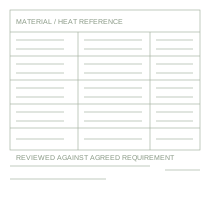
  • material or heat reference, where applicable
  • inspection-record reference

The exact level of traceability depends on the component and the buyer’s requirement. The principle is simple: the right records should be identifiable to the right supply.

SAME REFERENCE
THROUGH
MANUFACTURING
TO SUPPLY

  1. COMPONENT
  2. IDENTIFICATION
  3. RECORDS
  4. SUPPLY
4 — BEFORE DISPATCH

Confirm the agreed quality
requirements before shipment.

Before dispatch, the applicable quality and documentation requirements should be reviewed against the agreed order basis. Where required, this includes confirming that:

A technical difference should not pass unnoticed into the final supply.

THE SUPPLY IS CORRECTLY IDENTIFIED

The component corresponds to the applicable order, drawing, reference or specification.

THE REQUIRED CHECKS HAVE BEEN ADDRESSED

The agreed verification requirements have been completed or appropriately supported.

IMPORTANT DIFFERENCES ARE CLARIFIED

Any material deviation, proposed alternative or unresolved technical point is addressed before shipment.

Requirement → Verification → Evidence → Supply

The same agreed basis should remain connected throughout.

HAVE SPECIFIC QUALITY REQUIREMENTS?

Share them with the enquiry.

If your requirement includes particular inspection, material, traceability or documentation expectations, share them as early as possible. That allows those requirements to be considered during technical review and manufacturing-capability alignment rather than being introduced only before dispatch.

CLEAR REQUIREMENTS
SUPPORT A SMOOTHER
SUPPLY